Independent, plain-English research on prop trading firms — evaluation rules, payouts and red flags, before a single dollar leaves your account.

What actually determines payout speed at a prop firm, how to verify it independently, and the questions to ask before assuming a firm pays quickly.
Read the guide →
A price-focused comparison of prop firm challenge fees by account size, and why the lowest sticker price isn't always the cheapest way to get funded.

How to stay ahead of prop firm rule changes in 2026 — what typically changes, why, and how to protect an account in progress when it does.
A step-by-step method for sizing positions around a firm's daily loss and maximum drawdown limits, with a worked example.

Why the best evaluation strategy is usually the most boring one: an overview of trading approaches that fit drawdown and consistency rules well.

Why most funded-trader payouts are treated as self-employment or business income rather than wages, and what that means for reporting obligations.

A general overview of how funded-account payouts are typically treated for US tax purposes, and why the trader-firm relationship matters for reporting.

The specific contract and rule-document red flags that matter most before paying a prop firm challenge fee, beyond general reputation checks.

A practical checklist for verifying whether a prop trading firm is trustworthy before you pay for an evaluation, based on publicly checkable signals.
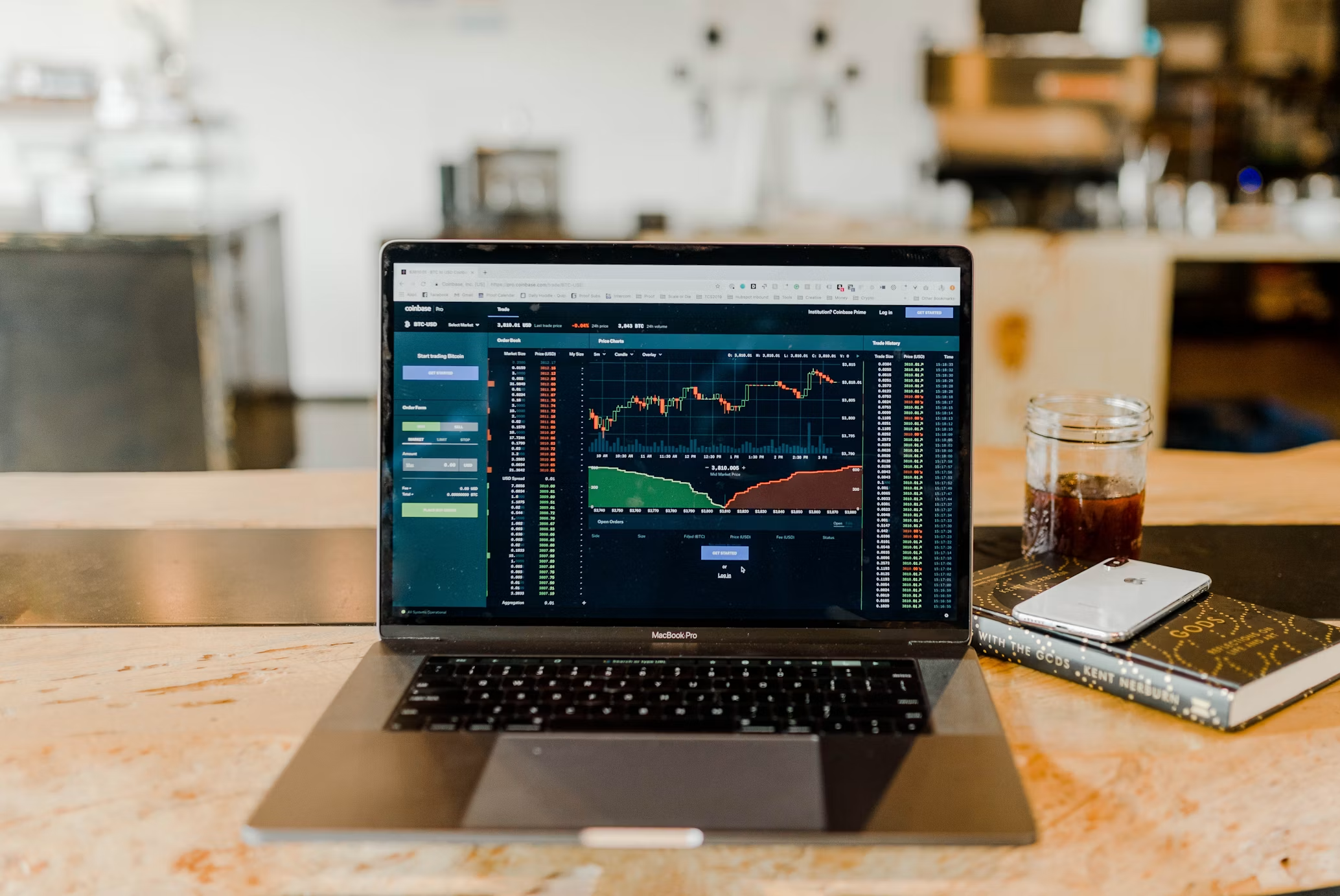
What to look for in a funded account if your focus is index trading — spreads, session rules and news-trading restrictions on US30, NAS100 and SPX500.

Forex/CFD funded accounts and futures funded accounts run on different platforms, sessions and rules. Here is how to choose the right one for your trading style.

What an 80/20 or 90/10 profit split actually means for your take-home pay, and why the highest advertised split is not always the best deal.

From profit split to withdrawal request: a complete, step-by-step explanation of how payouts actually work on a funded trading account.
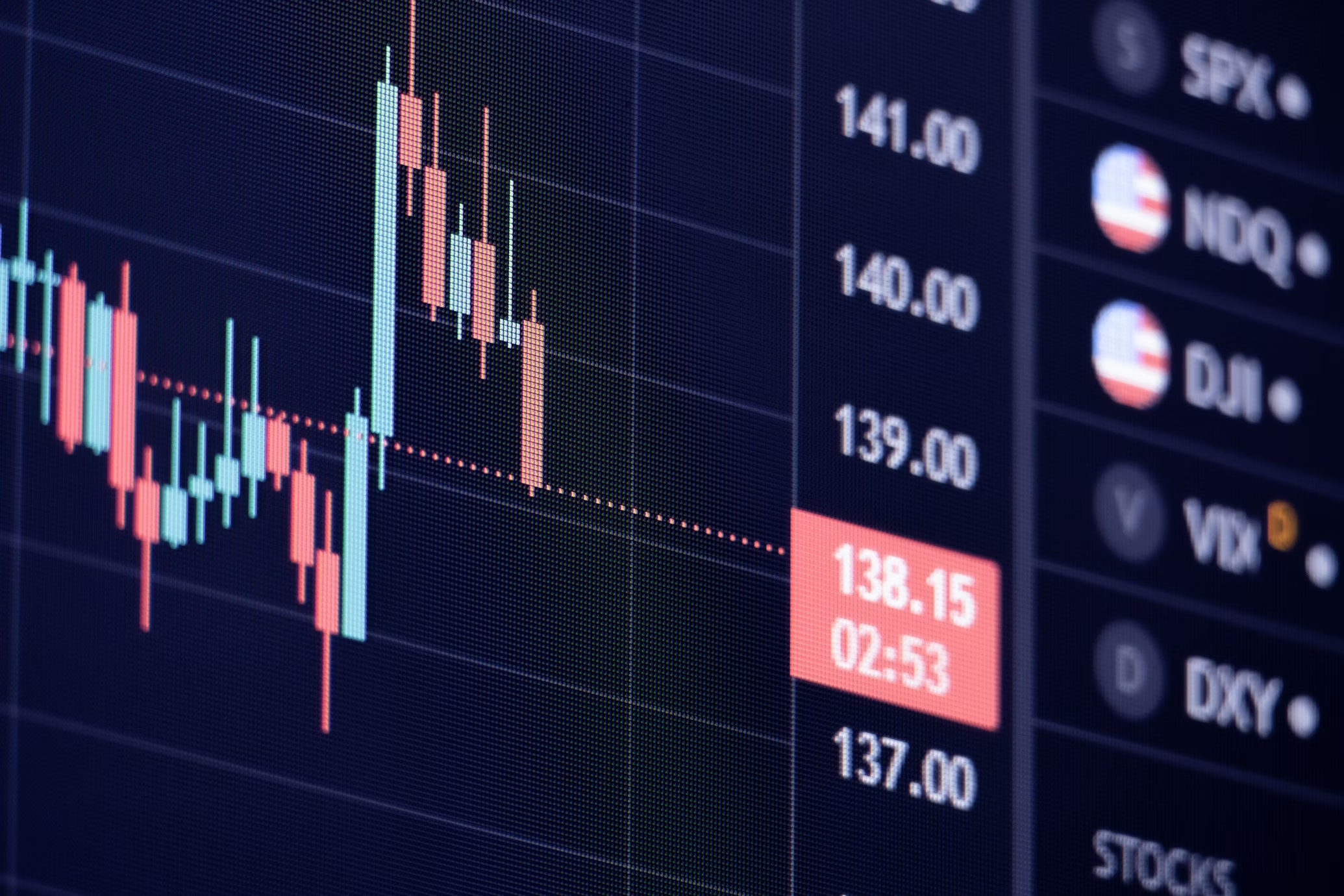
Daily loss limits and maximum drawdown rules are the two numbers that decide most prop firm evaluations. Here is exactly how each one works and why the difference matters.
A realistic, step-by-step approach to passing a prop firm evaluation: planning around drawdown rules, sizing positions and avoiding the mistakes that fail most attempts.

FTMO and Topstep follow two very different models. Here is how their evaluation rules, markets and payouts compare, and which trader profile fits each one.

An independent, plain-English comparison of the leading prop trading firms in 2026: pricing, drawdown rules, profit split and payout speed.
A running overview of the trends shaping the prop trading industry in 2026 — new entrants, rule adjustments and where the sector appears to be heading.
Independent comparisons of the biggest funded-account providers, based on public rules, pricing and payout policies.
CHALLENGEHow evaluation phases actually work: drawdown limits, consistency rules and the mistakes that get accounts breached.
PAYOUTSProfit splits, withdrawal methods, waiting periods and what to do when a payout is delayed.
ACCOUNTSForex vs futures funded accounts, supported platforms, and which instruments each firm actually allows.
RED FLAGSHow to check whether a firm is trustworthy before paying for an evaluation, and how to spot manipulated reviews.
TAXESHow funded-account payouts are typically treated for tax purposes, and the legal status of the trader-firm relationship.
STRATEGYPosition sizing, risk-reward and psychology adapted specifically to evaluation and funded-account rules.
NEWSRule changes, new firms, and the events that regularly reshape the prop trading industry.