
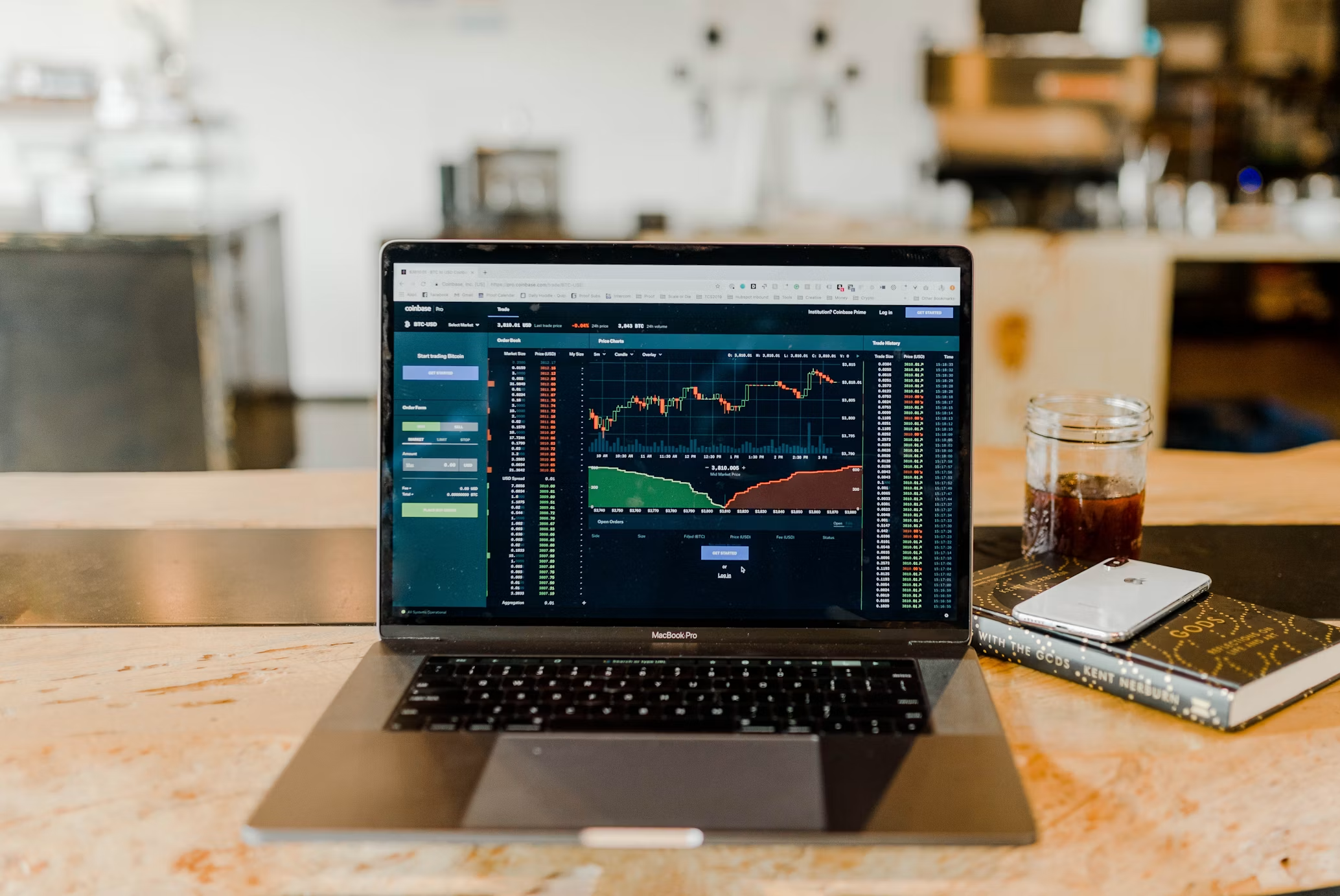
Major equity indices — commonly traded under tickers like US30, NAS100 and SPX500 — are among the most popular instruments on funded accounts because of their liquidity, clear intraday structure, and familiarity to traders coming from both CFD and futures backgrounds. Choosing a firm for index trading specifically means looking past the general marketing and checking a few index-specific details.
What actually matters for index traders
- Spread and commission structure during high-volatility windows — index spreads can widen sharply around the open of major sessions or scheduled news.
- News-trading restrictions — some firms restrict or void trades held through high-impact news events, which matters enormously for index traders since indices are highly reactive to macro data.
- Session-specific liquidity — index CFDs and futures both see the deepest liquidity around their home exchange's cash session; confirm the firm doesn't restrict trading during the specific session your strategy depends on.
- Overnight/rollover handling — index CFD positions typically carry a daily rollover cost or credit, which affects multi-day index strategies differently than intraday ones.
CFD indices vs index futures
| Aspect | Index CFDs (e.g. via MT4/MT5) | Index futures (e.g. E-mini S&P 500) |
|---|---|---|
| Contract standardization | Broker-defined, can vary between firms | Exchange-standardized tick value |
| Typical trading hours | Near-continuous with a daily close/reopen | Defined session with a maintenance break |
| Cost structure | Spread plus overnight financing | Commission plus exchange fees |
News-trading rules deserve special attention
Index prices react sharply to central bank decisions, employment data and inflation releases. Some funded-account rules explicitly restrict opening new positions in a window around these releases, or require positions to be flat before the announcement. Confirm this rule specifically before building an index strategy around trading through, rather than around, major news — a strategy that depends on news volatility can be structurally incompatible with a firm that restricts it.
Sizing considerations specific to indices
Index CFDs and futures both carry a meaningfully higher point value than most forex pairs, which means a small miscalculation in lot or contract size translates into a larger swing against the daily loss limit than the same error would on a currency pair. Recalculating position size specifically for the index's point value — rather than reusing a forex sizing habit — is one of the most common adjustments index traders need to make when moving to a funded account.
- Are indices more heavily restricted than forex pairs on funded accounts?
- Not universally, but news-trading restrictions are more consequential for indices given how reactive they are to scheduled economic data.
- Do overnight index positions cost more than forex overnight positions?
- Overnight financing varies by instrument and broker; check the specific swap or financing rate for the index you trade rather than assuming it mirrors forex costs.